The Best Gift for Medical Students: Digital Notebooks
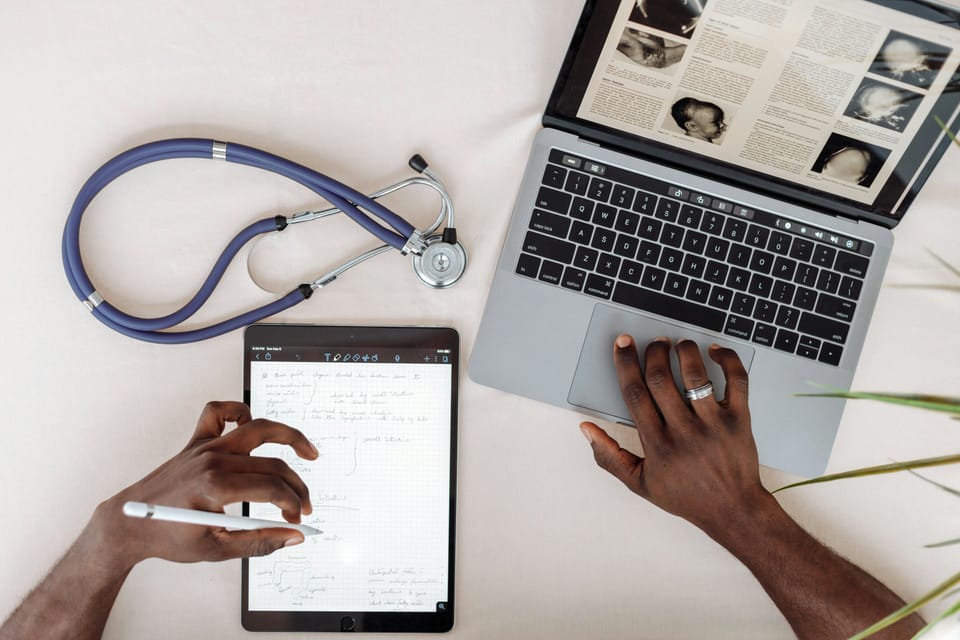
Studying medicine means managing an overwhelming amount of information, from anatomy and pharmacology to clinical procedures and case notes. With so much to absorb, how medical students take notes can make a real difference in how well they understand and retain what they learn.
The goal is not to write faster, but to learn more effectively. Digital note-taking with a pen, such as an Apple Pencil or S-Pen, combines the proven benefits of handwriting with the organization and flexibility of digital tools. When paired with structured layouts and planners, digital notebooks help medical students keep complex subjects clear, connected, and easier to revisit over time.
Why Handwriting Helps You Remember
Research consistently shows that handwriting supports better memory and understanding compared to typing. A well-known 2014 study published in Psychological Science found that students who wrote notes by hand retained information more effectively than those who typed their notes.
One reason is that typing often encourages verbatim transcription. Students try to capture every word, turning note-taking into a passive activity, with very little processing happening in the moment. Handwriting, by contrast, is slower. It forces students to summarize, paraphrase, and decide what information truly matters, which leads to deeper cognitive processing.
Beyond speed, the act of writing itself plays an important role in learning. The fine motor movements involved in handwriting activate multiple areas of the brain associated with memory formation and understanding, particularly when visual and motor feedback work together during the writing process.
Importantly, these benefits are not limited to pen and paper. Studies have found that writing on a tablet with a stylus engages the same motor and cognitive processes, meaning students can retain the learning benefits of handwriting while enjoying the flexibility and organization of digital note-taking. In fields like medicine, where accuracy and long-term retention are critical, this combination is especially powerful.
Why Digital Note-Taking Works So Well for Med Students
Digital handwriting bridges the gap between effective learning and efficient organization. Medical students get the cognitive benefits of writing by hand without the limitations of paper.
Instead of worrying about space or messy corrections, digital notebooks allow students to expand diagrams, add annotations, and refine explanations as their understanding develops. Content can be rearranged or revisited without starting over, which is particularly helpful when topics build on one another over time.
As notes grow in volume, organization becomes just as important as comprehension. This is where digital note-taking truly stands out. Many note-taking apps can recognize handwritten text, allowing you to search across notebooks and instantly locate specific terms or concepts. Finding every reference to a topic like cranial nerve X or renal physiology no longer requires flipping through pages manually.
Using a structured note-taking template further supports this process. Clear layouts help keep handwriting legible and logically group information, reducing mental effort during revision and making it easier to review complex materials efficiently.
How Med Students Can Integrate Multimedia for Visual Learning
Once handwritten notes are organized digitally, the next advantage becomes clear: Medical learning is not text-based alone. Much of what students need to understand comes from visuals such as imaging, pathology slides, anatomical diagrams, and procedural illustrations. Digital note-taking enables you to bring all this information into a single, connected space.
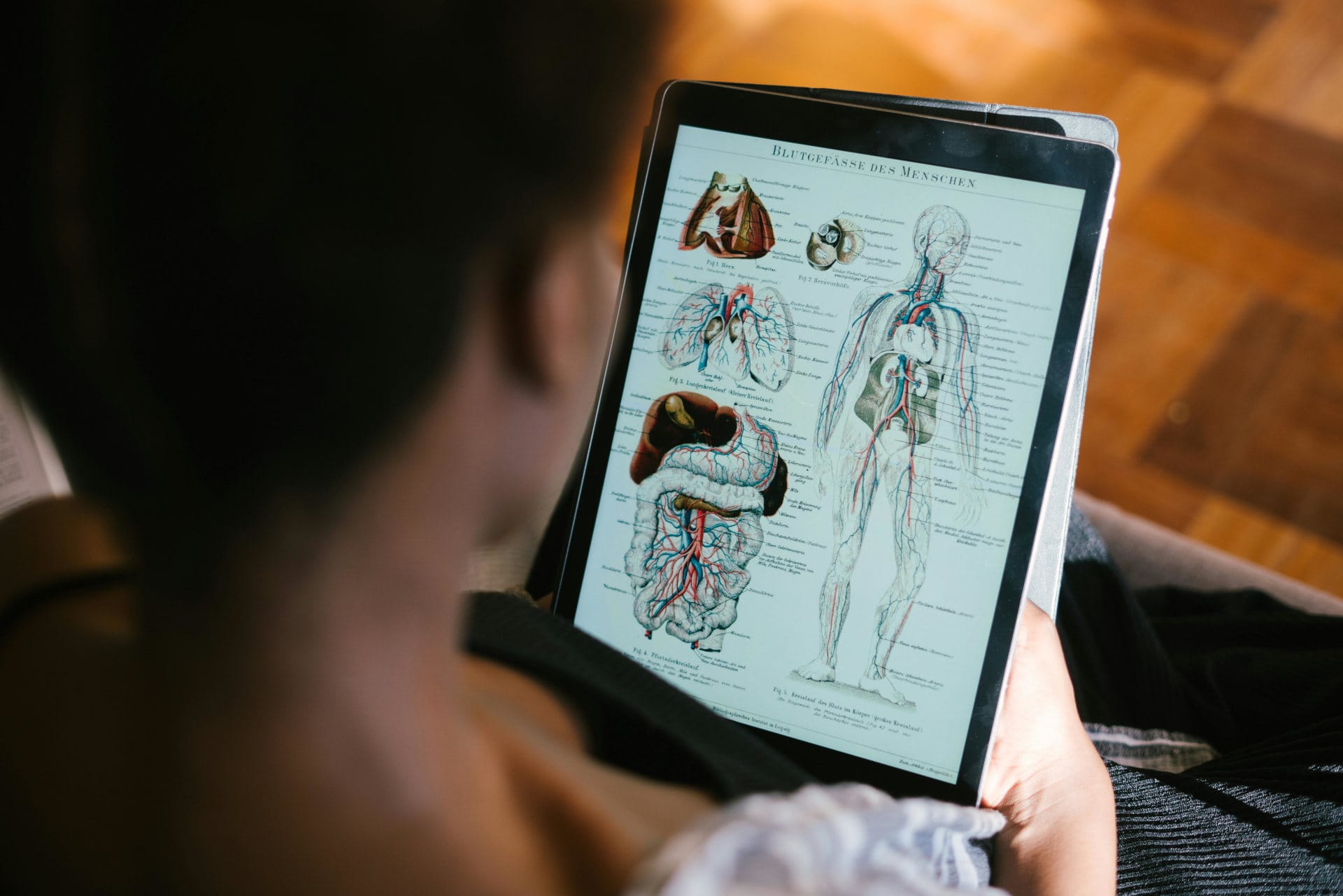
Instead of separating handwritten notes from lecture slides or textbook images, students can place visuals directly alongside their writing. Lecture slides can be imported and annotated by hand, allowing explanations to appear alongside diagrams rather than in a separate notebook. Clinical images from textbooks or trusted sources can be added and annotated with a digital pen to highlight structures, trace pathways, or emphasize abnormalities.
This combination of a handwritten explanation and a visual reference supports the dual-coding theory, which holds that learning improves when verbal and visual information are processed together. When students explain concepts in their own words while actively engaging with images, the material becomes easier to recall and apply. Over time, this approach helps transform complex medical information into understanding that lasts beyond exams.
Best Note-Taking Apps for Med Students
Once students have a solid note-taking approach in place, the next step is choosing an app that supports that system rather than getting in the way. The best note-taking apps are the ones that make handwriting, organization, and retrieval feel effortless, especially when managing large volumes of material.
- Goodnotes: Often considered the standard for digital handwriting, Goodnotes offers customizable pen settings, clear folder organization, and reliable handwriting search. This makes it especially useful for subjects that require repeated review and cross-referencing.
- Notability: Notability is particularly helpful for lectures, thanks to its audio recording feature that syncs playback with handwritten notes. Students can return to specific moments in a lecture and see exactly what they wrote at that time.
- OneNote: For students who move between devices or study across different environments, OneNote offers strong cross-platform compatibility. This flexibility can be useful in hospitals, libraries, and shared workspaces.
Choosing the right app helps ensure that handwritten notes, visuals, and structured templates all work together as one cohesive system.
How Medical Students Can Leverage Webudding Templates
Medical education is highly visual and detail-heavy. From anatomy diagrams to complex physiological pathways, having the right templates can make a meaningful difference in how effectively information is absorbed, organized, and reviewed over time.
1. Note-Taking on Head and Neck Anatomy
Head and neck anatomy is one of the most challenging areas of medical study due to its density and complexity. Using Webudding’s Mastering Head & Neck Anatomy Sticker Book allows students to annotate structures clearly with high-resolution anatomy visuals and interactive assets designed specifically for this region.
For students using digital note-taking apps, editable sticker text makes it easier to customize labels and refine notes as understanding deepens, supporting repeated review without rewriting entire pages.
2. Physiology Sticker Book With Notebook
Physiology concepts often need to be revisited across multiple systems and stages of learning. Our Editable Physiology Sticker Book (with notebook) includes 44 editable stickers covering cardiovascular, endocrine, gastrointestinal, renal, respiratory, and neurophysiology topics.
Hyperlinked contents pages make it easier to move between glossary terms, planners, and notes, helping students review efficiently while keeping related concepts connected.
3. Editable Neuroscience Sticker Book With Notebook
Neuroscience requires both visual clarity and conceptual structure. Our Editable Neuroscience Sticker Book (with notebook) includes 138 customizable brain-related stickers, from the hypothalamus to the limbic system, alongside an indexed layout that links glossary terms, planners, and notes.
This structure supports layered learning, allowing students to build understanding progressively rather than memorizing information in isolation.
4. Mastering Upper Limb Anatomy Sticker Book
Understanding the upper limb involves integrating knowledge of muscles, vessels, nerves, joints, and bones. The Mastering Upper Limb Anatomy Sticker Book provides 137 detailed anatomy visuals, an index, a glossary, dividers, and 25 note templates to help students organize information systematically across systems.
5. Mastering Back Anatomy Sticker Book
Back anatomy includes multiple overlapping layers that benefit from visual reinforcement. The Mastering Back Anatomy Sticker Book combines detailed anatomy stickers with note templates, a glossary, and dividers, supporting a structured approach to studying spinal anatomy with clarity and consistency.
The Ultimate Gift for Med Students
The best gifts for medical students are not just practical, but supportive of how they learn over the long term. Studying medicine requires more than memorization. It requires systems that help students understand, organize, and revisit complex information as their knowledge builds.
Digital handwriting, when paired with structured templates and planners, supports this process by turning notes into a searchable, adaptable knowledge base. Instead of juggling multiple notebooks or scattered resources, students can keep their learning centralized and connected.
Rather than offering a single-use item, Webudding’s digital planners and templates create a framework that medical students can rely on throughout semesters, clinical rotations, and beyond. For pre-med students just starting out, as well as those already deep into medical training, this kind of flexible planning system can become a trusted companion throughout years of studying medicine.
Comments ()